Source RF EAS Security Label Tags for Retail and Jewelry
Find and compare 30 RF EAS security label options for jewelry stores, supermarkets, and shopping arcades. These electronic tags feature frequencies like 8.2MHz and 9.5MHz with detection ranges up to 2.0m. Review specifications, certifications, and pricing to select the right soft or hard tags for your inventory protection needs.
Key considerations
Products List


Comprehensive Sourcing Guide
RF EAS Security Label Sourcing Guide
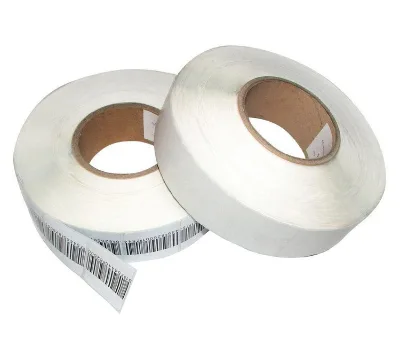
Radio Frequency (RF) Electronic Article Surveillance (EAS) security labels are passive adhesive tags designed to trigger alarms at store exits when they pass through detection gates without being deactivated. These soft labels are a cornerstone of retail loss prevention strategies, offering a cost-effective solution for protecting high-volume, low-cost merchandise. Unlike hard tags that require manual removal, RF labels are typically deactivated at the point of sale using a deactivation pad, allowing for a seamless checkout experience while maintaining robust security coverage.
The primary mechanism behind these tags involves a resonant circuit composed of an inductor and a capacitor, tuned to a specific frequency such as 8.2 MHz or 9.5 MHz. When an active RF field from a detection gate interacts with the tag, it induces a current that generates a secondary signal. If the tag remains active, the gate detects this signal and triggers an alarm. The reliability of this system depends heavily on the quality factor of the tag’s components and the consistency of its manufacturing, making supplier verification critical for procurement teams.
Product Scope and Observed Listing Signals
The market for RF EAS labels encompasses a variety of form factors, including rectangular sizes like 3x3 cm, 3x4 cm, 4x4 cm, and 5x5 cm, as well as circular variants with diameters around 50x67 mm. These dimensions allow buyers to select tags that fit specific product packaging, from small jewelry items to larger garment tags or book covers. The labels are predominantly white or black, with options for custom barcodes or printing, enabling retailers to integrate security features directly into their branding or inventory management systems.
Observed listing signals indicate that these products are often sold in bulk rolls or cartons, with standard packing configurations such as 1,000 pieces per roll and 20,000 pieces per carton. The gross weight of these cartons typically ranges from 10 kg to 15 kg, which influences shipping logistics and storage requirements. Buyers should note that while some listings highlight specific detection distances, these figures are often dependent on the specific gate system installed and the orientation of the tag, rather than being an absolute property of the label itself.
Technical Specifications to Verify
Frequency selection is the most critical technical parameter, with 8.2 MHz being a common standard for general retail applications, while 9.5 MHz may be used in specific regional or specialized contexts. Buyers must ensure that the selected tag frequency matches the configuration of their existing detection gates to avoid false negatives or system incompatibility. The quality factor, often cited as being greater than 80, is a key indicator of the tag’s sensitivity and reliability; a higher quality factor generally correlates with a stronger signal response and better detection performance.
Detection range is another vital specification, with observed values ranging from 0.9 meters to 2.0 meters depending on the tag model and gate power. However, these distances are not guaranteed for every installation and should be validated through on-site testing. The system design is strictly RF-based, meaning the tags are passive and do not require batteries, which simplifies maintenance and reduces long-term operational costs. Buyers should verify the deactivation method, ensuring that the tags are compatible with their point-of-sale deactivation equipment.
Compliance and Safety Documentation
Certification is a mandatory requirement for entering many international markets, with CE marking being a prevalent standard for RF EAS labels. This certification indicates that the product meets EU health, safety, and environmental protection standards, particularly regarding electromagnetic compatibility. Buyers should request valid CE certificates from suppliers to ensure that the tags do not interfere with other electronic devices in the retail environment and comply with local regulatory frameworks.
Additional certifications such as SGS and RoHS provide further assurance regarding material safety and manufacturing quality. RoHS compliance ensures that the tags are free from hazardous substances like lead and mercury, which is increasingly important for environmentally conscious retailers. ISO certification may also be present, indicating that the supplier follows standardized quality management processes. Procurement teams should verify the authenticity of these documents and ensure they are up-to-date, as expired certifications can lead to customs delays or legal liabilities.
Cost Drivers and Commercial Terms
Pricing for RF EAS labels is highly volume-dependent, with observed ranges extending from low single digits to over $100 for bulk orders, though unit costs decrease significantly with higher quantities. Minimum Order Quantities (MOQ) vary widely, starting from as low as 1 piece for samples up to 100,000 pieces for large-scale industrial orders. Typical MOQs for standard production runs are often around 20,000 pieces, which aligns with standard carton packing sizes and helps optimize shipping efficiency.
Payment terms are generally flexible, with options including Telegraphic Transfer (T/T), PayPal, and Western Union. Buyers should negotiate clear payment schedules, such as a deposit followed by balance payment before shipment, to mitigate financial risk. Delivery times are typically short, often around 5 days after deposit receipt, but this can vary based on stock levels and customization requirements. It is essential to clarify whether the quoted price includes packaging, shipping, and any potential customs duties to avoid hidden costs.
Supplier Qualification and Quality Control
Supplier location is a significant factor in supply chain reliability, with major manufacturing hubs located in Jiangsu and Guangdong provinces in China. These regions have established ecosystems for electronic component manufacturing, offering competitive pricing and rapid production capabilities. Buyers should verify the supplier’s physical address and production capacity to ensure they can meet large order volumes without compromising quality or delivery schedules.
Quality control processes are critical for maintaining consistent performance across large batches. Reputable suppliers often implement multiple testing stages during production, such as four distinct tests before delivery, to ensure that each tag meets the specified quality factor and detection standards. Buyers should request sample units to conduct their own detection tests using their specific gate systems. Additionally, warranties of up to two years from the date of delivery may be offered, providing a safety net against manufacturing defects.
Long-Term Procurement Checks
Sustainability and regulatory changes are evolving factors that impact the long-term viability of RF EAS label procurement. As environmental regulations tighten, suppliers may need to update their materials to maintain RoHS and REACH compliance. Buyers should monitor these regulatory shifts and ensure that their suppliers are proactive in adapting to new standards, thereby avoiding disruptions in supply due to non-compliance.
Technological advancements in detection systems may also necessitate periodic reviews of tag specifications. While RF technology is mature, improvements in gate sensitivity and interference rejection may require updates to tag designs or frequencies. Establishing a long-term relationship with a reliable supplier can facilitate smoother transitions to new product versions. Regular audits of supplier quality control processes and periodic re-testing of incoming batches will help maintain the integrity of the retail security system over time.
FAQs
What frequency do RF EAS security labels typically use?
RF EAS security labels commonly operate at 8.2MHz or 9.5MHz depending on the specific model. The frequency must match the detection system installed in the store to ensure reliable alarm triggering. Buyers should verify the frequency specification matches their existing hardware before ordering.
What is the standard MOQ for RF EAS security labels?
The standard minimum order quantity is 20,000 pieces per carton. This bulk packaging structure supports large-scale retail deployments and reduces per-unit logistics costs. Smaller trial orders may be available for sample testing, but production runs typically require this volume threshold.
Which certifications are required for RF EAS security labels?
Common certifications include CE, SGS, ISO, and RoHS. These standards verify compliance with international safety and environmental regulations. Ensuring the supplier holds these certifications helps avoid customs delays and ensures the product meets global retail compliance requirements.
Can RF EAS security labels be customized with barcodes?
Yes, customization is available for both color and barcode printing. Labels can be printed with specific barcodes or custom designs to match store branding. This allows for better inventory tracking and visual consistency across different retail environments.
What is the typical detection distance for RF EAS labels?
Detection distance generally ranges from 0.9 to 2.0 meters depending on the label size and system configuration. Larger labels often provide stronger signals for longer detection ranges. The exact distance depends on the specific antenna setup and label quality factor.
How long is the warranty for RF EAS security labels?
Suppliers often provide a two-year warranty from the date of delivery. This coverage ensures the labels maintain their magnetic and electronic integrity during normal retail use. Warranty terms may vary, so buyers should confirm specific conditions with the manufacturer.
What are the common applications for RF EAS security labels?
These labels are widely used in supermarkets, jewelry stores, shopping arcades, and bookstores. They provide theft deterrence for high-value or small items. The soft label design makes them suitable for clothing, accessories, and general merchandise protection.